
If you’ve spent even a few hours learning SEO, you’ve almost certainly stumbled across these two terms. On-page SEO. Off-page SEO. People argue about which one matters more, the way Nepalis passionately debate the best momos shops in Thamel, and usually without a clear winner.
However, here’s the key: understanding how they work together is what distinguishes a struggling website from one that actually ranks on Google. Let’s break it all down clearly, without the jargon overload.
What Is On-Page SEO?
On-page SEO refers to all the optimizations you make directly on your website to help search engines understand your content and serve it to the right users.
Think of it as setting up your shop properly, good signage, organized shelves, and a clean layout. If visitors walk in and can’t find what they need, they leave. Google notices that too.
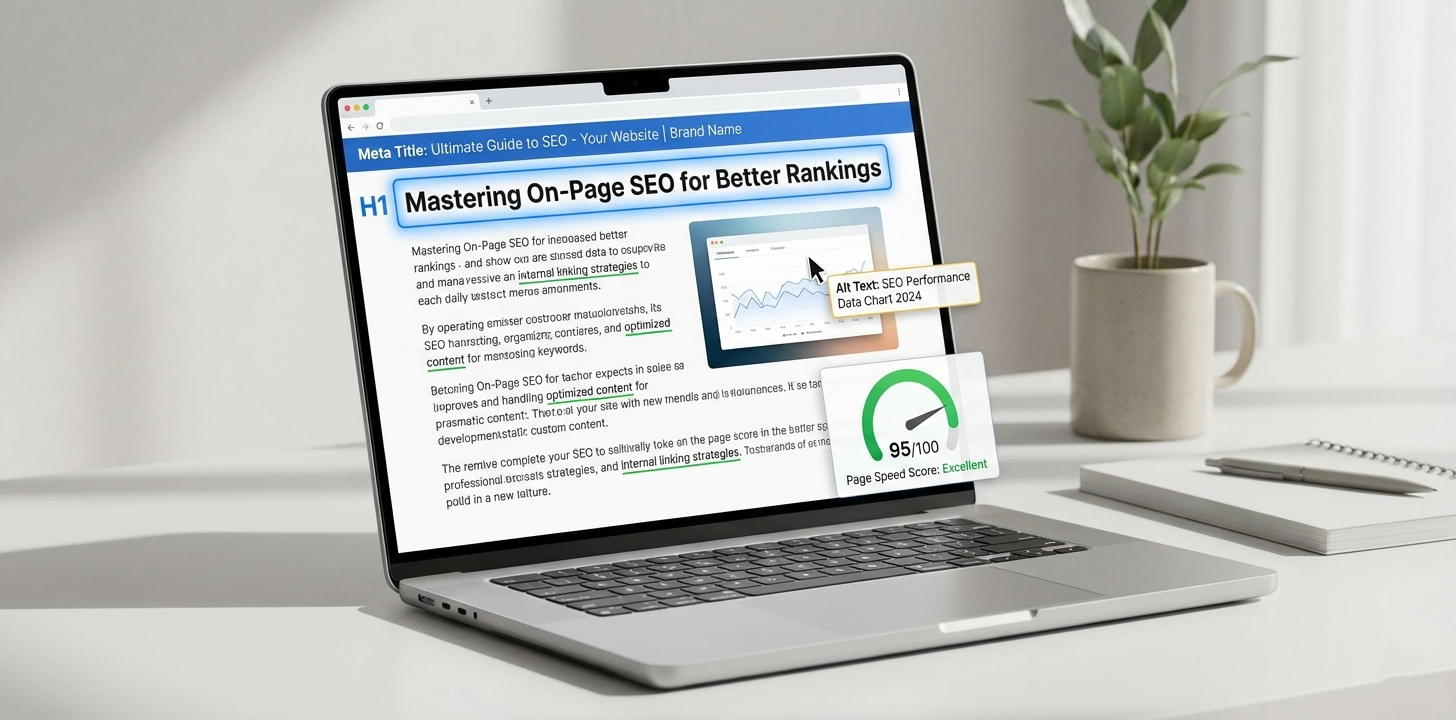
Core On-Page SEO Elements
Title tags and meta descriptions are among the most important on-page signals. Your title tag tells both users and search engines what the page is about. A well-crafted title with your primary keyword placed naturally, not stuffed, still carries significant ranking weight in 2026.
Heading structure (H1–H3) helps Google understand your content hierarchy. Use your H1 for the main topic, H2s for major sections, and H3s for supporting points. This isn’t just for crawlers; it improves readability for real users too.
Content quality and keyword optimization remain central. Google’s Helpful Content guidelines (last updated in 2024) explicitly prioritize content written for people, not algorithms. That means your content should answer the actual question a user typed into the search bar completely and honestly.
Internal linking is an underrated on-page technique. Linking relevant pages within your site distributes PageRank, helps Google crawl your site efficiently, and keeps users engaged longer. For Nepali businesses, especially, this is often overlooked.
Page speed and Core Web Vitals are now official ranking factors. Google’s PageSpeed Insights tool can show you how your site performs. Slow-loading pages, particularly on mobile networks common in Nepal, hurt both user experience and rankings.
Image optimization (alt text, file compression, descriptive file names) helps pages rank in image search and contributes to overall on-page health.
URL structure should be clean, short, and descriptive. Something like /seo-tips-nepal/ is far better than /page?id=3847.
What Is Off-Page SEO?
Off-page SEO covers everything that happens outside your website that influences how Google perceives your authority and trustworthiness.
The classic analogy: if on-page SEO is your CV, off-page SEO is your reputation. You can have a beautifully formatted CV, but if nobody in the industry knows who you are, you’re still at a disadvantage.
Core Off-Page SEO Elements
Backlinks are the backbone of off-page SEO. When a credible website links to yours, Google interprets it as a vote of confidence. Not all backlinks are equal. A link from a respected Nepali news portal like The Kathmandu Post carries far more weight than a link from a random directory site.
According to Ahrefs’ study of over one billion web pages, 66.31% of pages have zero backlinks, and most of those pages get no organic traffic. The correlation between backlinks and rankings remains strong in 2026, even as Google refines how it evaluates link quality.
Brand mentions and citations, even without a direct link, are increasingly recognized by Google as signals of authority. When people talk about your brand online, that matters.
Social signals don’t directly affect rankings, but content that gets widely shared earns more visibility and more visibility often earns more backlinks. It’s an indirect but real feedback loop.
Guest posting on authoritative sites within your niche is still a legitimate and effective strategy, as long as the content is genuinely useful and not purely promotional.
Local SEO signals, especially Google Business Profile optimization, local citations, and reviews, are critical off-page factors for businesses targeting Nepali customers. If you run a business in Kathmandu, Pokhara, or Biratnagar, your Google Business listing is arguably your most important off-page asset.

On-Page vs Off-Page SEO: A Quick Comparison
| Factor | On-Page SEO | Off-Page SEO |
|---|---|---|
| Control | Full control | Limited control |
| Focus | Content, structure, speed | Links, authority, reputation |
| Timeline | Results faster | Results take longer |
| Effort | Technical + content | Relationship + outreach |
| Cost (basic) | Lower | Can be higher |
Which One Matters More in 2026?
Here’s the answer nobody wants to hear: both do, and the question itself is a bit of a false choice.
That said, the priority depends on where you are in your SEO journey.
If your site is new, on-page SEO should come first. There’s no point building backlinks to a page with thin content, a broken structure, or a 10-second load time. Google won’t rank a poorly optimized page even if it has links pointing to it. Get your foundation right first.
If your on-page SEO is solid but you’re stuck on page two or three, off-page SEO is likely what’s holding you back. At that stage, your competitors probably have stronger link profiles and higher domain authority. Outreach, content marketing, and digital PR become your primary levers.
For competitive keywords in Nepal: such as “visa consultancy Kathmandu,” “SEO Expert In Nepal,” or “tours and travels seo freelancer in kathmandu” both factors are essential. Pages ranking at the top of Google Nepal for these terms tend to have well-optimized content and a meaningful backlink profile.
Google’s own Search Quality Rater Guidelines place heavy emphasis on E-E-A-T: Experience, Expertise, Authoritativeness, and Trustworthiness. On-page content demonstrates expertise. Off-page signals, particularly backlinks from authoritative sources, build authoritativeness and trust. You need both pillars for long-term ranking success.
Practical SEO Priorities for Nepali Websites in 2026
If you’re running a website targeting Nepali audiences, here are some grounded recommendations:
Starting with on-page fundamentals is non-negotiable. Ensure every page has a unique title tag, a proper H1, quality content that genuinely helps the reader, and loads in under 3 seconds, especially on mobile.
For off-page growth, focus on earning links from Nepali media, industry blogs, and community platforms. Local directories like Nepal Yellow Pages, government portals, and reputable news sites are valuable sources of citations and backlinks.
Don’t underestimate Google Business Profile. For local businesses, this single off-page asset can drive more conversions than any blog post.
Create content worth linking to. Original research, practical guides, and infographics about Nepal-specific topics naturally attract backlinks over time without cold outreach.
The Bottom Line
On-page SEO and off-page SEO are not rivals. They’re partners. One without the other leaves real ranking potential on the table.
Think of it this way: on-page SEO makes Google understand your content. Off-page SEO makes Google trust it. You need both to truly rank in 2026, whether you’re optimizing a business in Kathmandu or targeting international traffic from Nepal.
Start with what you control, build from there, and let the results guide your next move. That’s not just good SEO advice, that’s just good strategy.
REFERENCE
Google Search Central Blog (Official Announcement)
