
Generative Engine Optimization: How to show up inside ChatGPT and Gemini answers, not just Google.
Let’s be honest. Most SEO advice right now sounds like a remix of the same 2019 playlist. Write good content. Build links. Optimize your title tags. Sure, that still matters. But something bigger is quietly reshaping how people find information online, and most niche blogs haven’t even noticed yet.
AI search is here. ChatGPT crossed 100 million users in just two months after launch, making it the fastest-growing consumer application in history, according to a Reuters-cited UBS analysis from 2023. Perplexity, Gemini, and similar tools now answer millions of queries every day without sending users to a website at all.
That’s not a threat. That’s an opportunity: if you move first.
This is where Generative Engine Optimization (GEO) comes in. It’s the practice of optimizing your content to appear inside AI-generated answers, not just traditional search results. And right now, almost nobody in your niche is doing it properly.
What Is Generative Engine Optimization(GEO)?
The term was formally defined in a research paper published in August 2023 by researchers from Princeton University, Georgia Tech, IIT Delhi, and the Allen Institute for AI. The paper, titled “GEO: Generative Engine Optimization,” studied how content can be structured to improve visibility inside AI-generated search responses, the kind you now see in ChatGPT, Perplexity, Google’s AI Overviews, and Gemini.
In short, generative engine optimization is SEO for AI search. Traditional SEO helps you rank on a results page. GEO helps your content get cited, quoted, or referenced inside an AI’s actual answer.
Think of it this way. When someone asks ChatGPT, “What’s the best tool for keyword research?” the AI doesn’t just display ten blue links. It answers, and somewhere inside that answer, it pulls from specific sources. GEO is about making your content one of those sources.

Why AI Search Is Reshaping Traffic Flows Right Now?
Here is the uncomfortable truth for content marketers. Zero-click searches were already a growing problem on traditional Google. Now, AI Overviews and generative answers are pulling even more engagement away from individual websites.
BrightEdge research found that AI Overviews in Google appear across a wide range of query types, particularly informational searches, exactly the type most content blogs and niche sites rely on for traffic. When an AI answers the question directly, click-through rates drop significantly.
But there’s a flip side. When AI systems cite sources, those sources get real authority signals. Users who see your brand name inside a ChatGPT or Gemini response are more likely to search for you directly, trust your site when they visit, and convert at a higher rate. Citation inside an AI answer is like being quoted in a trusted publication; it builds credibility fast.
The shift is happening now. The brands and content creators who figure out SEO for AI search in 2024 and 2025 will own their niches for years. The ones who wait will be playing catch-up on a field that barely exists yet.
How to Actually Rank in ChatGPT and Gemini Answers?
The Princeton-Georgia Tech GEO paper tested ten different content optimization methods and measured which ones improved AI search visibility the most. The results were clear and, refreshingly, not based on any black-hat tricks. Here’s what actually works.
1. Cite Real, Authoritative Sources
AI models are trained to trust content that references reliable data. When your article cites a peer-reviewed study, a government report, or a reputable industry source, it signals authority both to human readers and to the generative models parsing your content.
The GEO paper found that adding citations was one of the most effective strategies for improving visibility in AI-generated responses. Not random links, but meaningful references to real data. This aligns perfectly with Google’s own E-E-A-T guidelines (Experience, Expertise, Authoritativeness, Trustworthiness), which is a good sign GEO and traditional SEO aren’t at war here. They’re converging.
2. Use Real Statistics and Specific Data
Numbers are magnetic to AI systems. A sentence like “AI adoption is growing” tells a language model nothing concrete. But “ChatGPT reached 100 million users within two months of launch” gives the AI something quotable and verifiable.
According to the findings in the GEO research paper, adding statistics and quantitative data to content significantly improved the likelihood of that content being referenced in AI-generated answers. This makes intuitive sense. Generative models are rewarding specificity because their users expect accurate, grounded responses.
When you write content, ask yourself: where can I replace a vague claim with a real number? Where can I add a stat that a language model would actually want to quote?
3. Write with Clarity and Natural Flow
Readability matters more than ever. AI systems tend to pull from content that is coherent, well-structured, and easy to parse. Stuffed keywords, awkward passive constructions, and bloated paragraphs are not just bad for human readers; they make your content less likely to be cited by AI engines.
The GEO study specifically found that improving the “fluency” of writing, meaning clearer sentence structure, better flow, and more accessible language, had a measurable positive effect on AI visibility. That’s not a coincidence. It mirrors exactly what Google has been pushing with its Helpful Content guidelines.
Short paragraphs. Direct sentences. Real information. These aren’t just style preferences. They’re signals of quality that both search engines and language models respond to.
4. Structure Content So AI Can Find the Answer Easily
Generative models don’t read the way a human skimming a blog might. They extract meaning from structured chunks of content. Using clear headings, answering questions directly in the opening lines of each section, and keeping your key points easy to isolate all help AI systems pick up and use your content accurately.
This also means writing content that directly answers questions. If someone asks, “What is generative engine optimization?” your article should have a paragraph that states the answer clearly and concisely in the first few lines of that section, not buried in the fifth paragraph after a lot of context-setting.
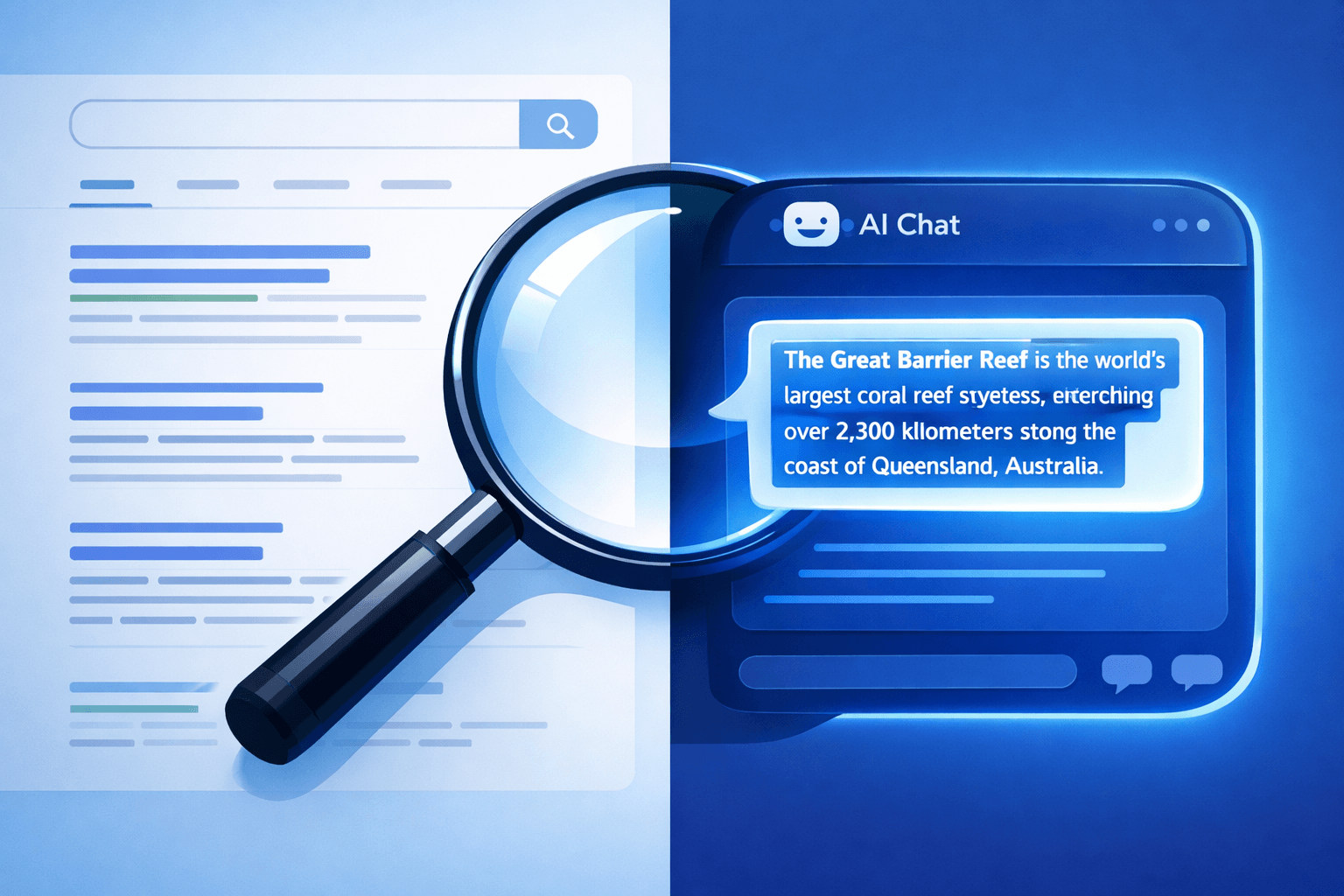
GEO vs Traditional SEO: What Actually Changes?
To be clear: traditional SEO is not dead. Google’s organic results still drive enormous traffic volume. GEO is an additional layer, not a replacement.
The biggest mindset shift is the audience. With traditional SEO, you’re primarily optimizing for a ranking algorithm that decides whether to show your page to a human user. With GEO, you’re optimizing for a language model that decides whether to pull your content into its response, and that model has been trained on billions of documents to recognize authority, accuracy, and clarity.
In practical terms, this means GEO pushes you toward content habits that were always considered “best practice” but rarely enforced: citing sources, using real data, writing clearly, covering topics comprehensively. If anything, GEO makes you a better content creator. That’s a pleasant side effect.
The First-Mover Advantage Is Real: And It Won’t Last Forever
Most niche blogs and content sites haven’t touched GEO yet. The concept is still primarily discussed in academic research circles and a small corner of the advanced SEO community. That’s exactly why now is the time to move.
First-mover advantage in search is historically powerful. The sites that built topical authority on a subject early, before competition flooded in, have held rankings for years. The same dynamic applies here. If your site becomes the go-to cited source in your niche for AI systems like ChatGPT and Gemini, that trust compounds over time.
Being referenced by an AI isn’t just a traffic play. It’s a brand authority play. Users who see your name inside an AI response carry that familiarity with them. They search for you directly. They trust you more when they land on your site. The conversion impact goes well beyond a single click.
Start Now, Your Niche Isn’t Ready
Generative engine optimization is not a distant future trend. It’s happening right now, in the searches your audience is already making on ChatGPT, Gemini, and Perplexity. The infrastructure is live. The queries are flowing. The question is simply whether your content shows up inside those answers or someone else’s does.
The formula is surprisingly approachable: cite real sources, use verifiable data, write clearly, and structure your content so that an AI can extract and credit it easily. That’s it. No secret algorithms to crack. No expensive tools required.
Whoever builds this habit first in their niche gets the authority. That advantage tends to stick. So the only real question is: are you going to be the first voice in your space to own this topic, or are you going to write about it after everyone else already has?
